The Autistic Master: Beyond the Archetype
July 26, 2026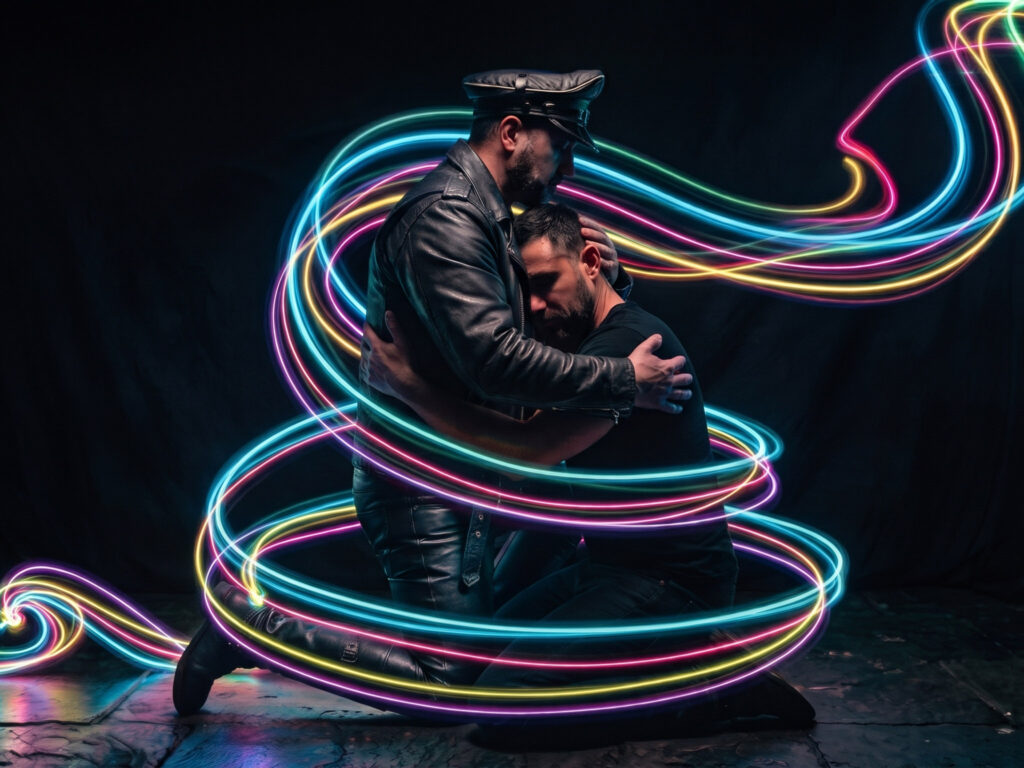
Not long ago, while scrolling through Instagram, I stumbled upon an online debate where an autistic guy was trying to explain the lack of truly accessible spaces for his needs and how he often felt excluded. I immediately empathized with his situation. What caused me deep frustration was seeing the immediate response, not from the neurotypical community, but from several ADHD kinksters who, speaking categorically in the name of “neurodiversity,” denied his reality by claiming the environment was indeed inclusive.
It bothered me, not out of anger toward ADHD, but out of the frustration of seeing a deeply autistic experience dismantled by someone who assumed their own neurodivergent experience was the only valid one.
Neurodiversity is not a homogeneous block; it is a spectrum of spectrums. It was through reading Thomas Armstrong’s highly recommended book, The Power of Neurodiversity, that I understood the different realities and abilities of those of us born with autism, ADHD, dyslexia, or other conditions. Our brains process differently and develop unique capacities to navigate a world designed by and for neurotypicals.
But there is a key element in these times: while autism involves a series of social difficulties that are often perceived negatively—and which we tend not to expose too publicly due to the stigma, the risk of it becoming a workplace glass ceiling, and our preference to avoid the social spotlight—the ADHD kinkster does not suffer from that same stigma in the same way. By usually moving with ease in group environments and integrating better into the neurotypical world, ADHD doesn’t typically create that same workplace glass ceiling or direct social exclusion (which doesn’t mean it is exempt from discrimination, but it operates on a different frequency).
The ADHD kinkster is often perceived as a social animal. They need stimulation, the tribe, to shine, to feel accepted, and to connect through live energy, even if they sometimes clash through excesses or impulsive jokes.
The autistic person, on the contrary, tends to shy away from mass exposure and the struggle for the spotlight. As I’ve shared in previous articles, my way of navigating large events is to arrive among the first and leave among the first, fleeing from the noise of the crowd to focus on intimate, one-on-one conversations. This difference in profiles explains very well why public discourse and social media presence are massively dominated by ADHD.
However, that high social exposure of ADHD has a flip side: their social battery isn’t drained simply as time passes by, but by emotional triggers. The fear of rejection (so-called Rejection Sensitive Dysphoria, or RSD), hypervigilance for acceptance, or saturation from overstimulation end up burning out the ADHD kinkster in the middle of the crowd. And that is precisely where the magic of neurodiversity happens: the autistic person becomes the anchor for the ADHD mind.
When the ADHD kinkster reaches that point of saturation from so much social interaction and desperately seeks refuge, the presence of an autistic mind offers them a safe space. Why does this connection work so well?
No competition for space: the autistic person isn’t looking to steal the spotlight or compete for group attention. There is no struggle of social egos.
- Validation without judgment: the autistic person doesn’t perceive the ADHD person as “too loud” or “extravagant”, because the autistic person isn’t interested in nor do they master the codes of neurotypical social desirability. The ADHD kinkster feels heard and valued, free from masking.
Stability amid the noise: when ADHD enters collapse or dispersion, the analytical, predictable, and observant calm of the autistic person acts as a safe harbor where the tide suddenly drops.
As an austistic Master, this complementarity makes me enjoy so much guiding and dominating ADHD kinksters.
Curiously, sessions with other autistics have given me unsatisfactory results, with a couple of exceptions. Since two autistics both seek a specific and usually rigid structure, we have sometimes found ourselves with frankly incompatible play spaces. If one needs a pinpoint protocol system and the other has their own set of inflexible internal rules, the pieces clash. The same thing happens in roleplay or fantasy frameworks: each autistic person enters the scene implicitly expecting the other to adopt their exact mental map, and if their partner doesn’t connect or fit 100% into that precise script, the scene simply blocks.
However, with ADHD kinksters, the dynamic has always flowed. What for me is a tool for self-regulation and technical precision becomes for them the perfect remedy against their own chaos.
In my experience, the common space between autism and ADHD in a session is covered by the following points, which in any case can serve any Master well when navigating a scene with an ADHD submissive:
- Explicit negotiation: from flirting to “Black and White”. Traditional flirting is riddled with ambiguity and social subtexts that exhaust any neurodivergent mind. The advantage of BDSM is that it replaces guessing with direct “black and white” negotiation. As an autistic Master, ambiguity is alien to me: I set rules, limits, and expectations with absolute clarity. Putting emotions and agreements in writing gives the ADHD kinkster the certainty their hypervigilant brain needs to relax.
- Overcoming resistance to planning. The ADHD kinkster often fears that negotiating, using lists, or planning will ruin the “magic” or spontaneity of play. As an autistic Master, I show them that structure is not a prison, but a safe container. My analytical rigidity doesn’t choke their play; it frees them from having to make decisions in the middle of a scene. By knowing exactly where the boundaries of the map are, their mind gives itself permission to let go of control and surrender to subspace.
- Stimulation, dopamine, and hyperfocus. The ADHD mind disconnects if it falls into slow or monotonous routines, but it plunges 100% into deep hyperfocus if the stimulation is right. As an autistic Master, my technical precision and strategic use of music allow me to design changing impact patterns, oscillating rhythms, and concrete physical tasks. I provide a constant flow of novelty and calculated tension that feeds their dopamine (especially through Brat play), keeping their attention nailed to the scene, with music acting as an anchor, not allowing them to drift.
- Sensory filter and micro-distractions. Background noise, uncomfortable lighting, or a clothing tag can instantly pull an ADHD kinkster out of subspace. As an autistic Master, I apply my own sensory sensitivity to the environment: I design the space by reducing parasitic noise, taking care of the temperature (and periodically asking if the temperature and music are okay), adjusting the lighting, and using blindfolds to eliminate visual distractions. I maintain absolute control over physical variables so no external stimulus breaks their trance.
- Working memory vs. “Neurodivergent Punishment”. One of the biggest dangers in BDSM with ADHD is giving complex chains of commands that collapse their short-term memory (working memory). If they forget an order or an elaborate safeword and are punished for it, you commit the injustice of penalizing a neurological trait, triggering their trauma. As an autistic Master, I adapt commands to single-step sequential instructions. If there is a slip-up, I don’t react out of ego or frustration; if I see frustration appearing in him, I use praise for what was accomplished and reinforce protocols so instructions integrate naturally across subsequent sessions. This allows him to express without fear: “it’s not disobedience, it’s my memory”, adjusting the instruction on the fly without turning a cognitive limitation into a disciplinary infraction.
- Visual tools and non-verbal communication. When emotions are intense or the ADHD brain enters overload, articulating words becomes extremely difficult. As an autistic Master, I integrate visual supports and alternative systems: I use spreadsheets (my famous Excel templates for tracking infractions), gesture/sound codes (like a tapping/slap system for yellow or red), and I hold his hand so he can squeeze it during specific moments of intensity (like extreme bondage with electro), allowing us to communicate in silence without cutting the flow of the scene.
- Dysregulation, RSD, and handling Meltdowns / Shutdowns. Rejection Sensitive Dysphoria (RSD) makes a poorly delivered correction feel to ADHD like a devastating rejection, potentially leading to a meltdown (an explosion of frustration or tears) or a shutdown (apathetic disconnection). As a Master, if a blockage occurs due to decision paralysis, I take control with simple, reassuring orders. If RSD appears, I immediately validate his intention, separating his personal worth from the execution of an order. If the scene breaks down, my calm acts as the firm anchor he can hold onto to return to earth.
Integration of trauma and degradation. Play with degradation or processing trauma can be a minefield for ADHD dysregulation if there is no firm safety net. As a Master, we approach the scene from a safety protocol focused on emotional security. Degradation becomes a role framed within unbreakable boundaries, ensuring that emotional intensity never overwhelms his ability to feel protected. If my submissive falls into an emotional pit, the transition to a safe space is immediate: hugs, praise, physical contact, a change of music, and something to drink allow him to regulate himself again.
Even with all this, I can assure you that interactions between an autistic person and someone with ADHD can be very intense. There are conflicting neurodivergent needs that, while they don’t separate us, can create moments of collision. However, when both parties make a conscious effort to understand how the other’s brain works, autistic rigor and ADHD intensity don’t clash: they balance, protect, and feed each other.